AYDIN ADNAN MENDERES UNIVERSITY
SÖKE FACULTY OF BUSINESS
ECONOMY DEPARTMENT
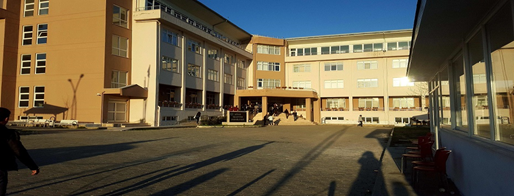
The Department of Economics was established in 2015 within the body of Söke Faculty of Business, which was established in 2011 and started operations in 2012-2013 academic year. The department started its activities in formal education with 3 full-time faculty members and 1 research assistant in the 2017-2018 academic year. The education period of the Department of Economics is 4 years. There are 5 departments within its body: Financial Economics, Economic Development and International Economics, Economic Policy, Economic History and Economic Theory. The "optional 1 year foreign language preparation" option offered in some departments of Söke Faculty of Business is not included in the Economics section. The language of instruction of the department is Turkish and there is no compulsory internship.
The main purpose of the Department of Economics is to provide students with a good economic background and a wealth of theoretical knowledge throughout their education; To enable them to transform into globalized individuals with analytical thinking skills, social responsibility and ethical understanding. It is extremely important for students to become individuals who can use the knowledge and skills they have acquired during their education when they graduate from the Department of Economics, transfer them into practice, and produce ideas and solutions. Therefore, taking into account that education is not limited to four years at the university, it should be considered in a broader perspective, a teaching plan has been created to enable students to gain the necessary knowledge and skills that will allow them to develop themselves continuously and to have a wide range of vocational range.
In this context, the undergraduate curriculum of the Department of Economics was prepared by taking into account the Economics / Economics departments of the Economics and Administrative Sciences, Economics and Business Faculties. This curriculum provides students with the knowledge required for employment opportunities in all economic institutions and organizations, economic problems and solutions, and the economic requirements of the globalizing new world and information age. The curriculum is based on compulsory courses such as Macro Economics, Micro Economics, International Economics, Monetary Economics, Econometrics, and Economic Analysis. Compulsory courses are supported by a rich pool of elective courses. The curriculum gives students the opportunity to take in-department and non-departmental elective courses, allowing them to specialize in areas of interest. Economics courses sometimes require mathematical and mostly graphical analysis. Therefore, students who will choose the department of Economics must have proficiency in areas such as analytical thinking, graphical analysis and mathematics.
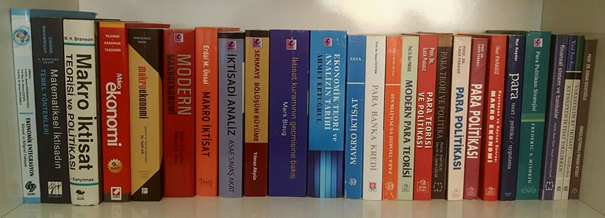
In addition to the compulsory courses that provide or develop sufficient knowledge in the fields of mathematics, statistics and econometrics, there are also course options in areas such as business, accounting, sociology, philosophy, economic history, law and management science. Economy program, created by the technological advances of the information age and globalization process and to examine the effects on Turkey and reveals different aspects of this process. This program supports students to develop their research, inquiry, analysis and synthesis skills.
PROGRAM OUTCOMES
Defines and evaluates basic economic concepts, theories and methods.
It offers basic policy recommendations against current economic problems.
Interpret the economic and social events in a historical perspective.
Explain the roles of economic actors (such as state, firm, household) in the economy.
Follows national and international economic indicators and developments, uses economic knowledge and methods in different areas.
It provides the methods, techniques and tools required for analyzing and modeling economic data and evaluates the results obtained.
Defines and comments on economic systems, decision mechanisms, policies and problems.
Benefits from other disciplines that form the basis of the field of economics and has the basic knowledge of these disciplines.
Explain and interpret economic growth, development and productivity problems at a basic level.
Have sufficient knowledge in the sub-branches of the economy chosen by them from fields such as public, industry, agriculture, environment and natural resources, labor, knowledge and property economies, international finance, money, political economy and econometric methods.
Defines and evaluates the concepts of business at a basic level.
Have the sufficient level of legal knowledge required by the highly skilled personnel required by both the public and private sector.
Defines the role of the concepts of innovation, creativity and technology in the dynamic global economy.
Demonstrates skills that may be useful for future employment opportunities and the work environment.
As a rational individual with professional and ethical responsibility, he guides science.
The Department of Economics aims to create the necessary education environment, produce projects and carry out original researches to raise individuals who are equipped with the information age, who are responsible, committed to ethical values, who can produce solutions in all areas of life, are conscious, principled, open to development, and who can make a difference for their own life and country. The Department of Economics has acquired the vision of raising individuals who can meet the professional and intellectual requirements of the global world and the information age, shape their lives and therefore think and question.
The qualification gained at the end of the 4-year education period in the department of economics is economics and financial expertise at the undergraduate level. In order to obtain a bachelor's degree in Economics, students must successfully complete a total of 240 ECTS, which corresponds to the compulsory and elective courses they must take in the Economics program. Students' GPA must be at least 2.00 over 4.00 for graduation. Students who meet the minimum passing requirements for a course are given the letter grades shown in the table below as a course grade at various levels, including D1:
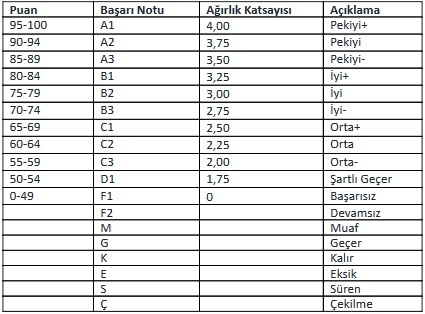
Each course is evaluated over 100 points by the lecturer, taking into account the final course grade, mid-term and final exam results and attendance status for each course. For each course they take, one of the letter grades in the above table is given to the students as a success grade by the instructor assigned to carry out the course in question. Students have the right to be absent for 4 weeks for a course during that semester. In the event of an absenteeism above this, students will be deemed unsuccessful with F2 and will repeat the course in the relevant semester of the following year with an attendance requirement.
Exams held for students in one semester; The midterm exam consists of the final exam, make-up exam and make-up exam. There are two basic exams, midterm and final exam, related to the courses offered in each semester. Course success grade is determined by taking 40% of midterm exam and 60% of final exam. Students who have a justifiable and valid excuse and document this and make the necessary applications have the right to make a make-up exam for the midterm exam that they cannot take. In order for the students to be accepted to the make-up exam, they must apply to the Dean's Office or Faculty Secretariat with a petition by adding the required documents within 3 days from the day of the excuse and the application must be accepted by the Faculty Administrative Board. Since the make-up exam starts right after the final exam, the right to make-up exam is limited to the midterm exam. Students who have somehow failed to take the final exam, who failed the exam, or who have a D1 grade and want to raise it can take the make-up exam. The make-up exam replaces the final exam. Regardless of midterm grades, students are considered unsuccessful if they get a grade below 50 from the final / make-up exam.
The procedures and principles regarding registration, education and examinations carried out at the undergraduate level at Adnan Menderes University are determined by the "Undergraduate Education and Training Regulation". For details, see: Student Undergraduate Education Regulations
Students who graduate from the Department of Economics appeal to a wide range of fields of study and business, regardless of the public or private sector. Economics graduates, who have employment opportunities in a wide range of areas from the industrial sector to the service sector, have the opportunity to work in all levels of the banking and finance sector, and have the opportunity to work as a manager. Apart from this, they can start working in high-level institutions such as the Ministry of Finance, the Ministry of Economy, the Undersecretariat of Treasury, the Central Bank, the Competition Authority, and the Capital Markets Board, especially within the framework of institutional examinations. As a result, Economics graduates have employment opportunities in developing sectors such as audit and insurance, especially in banking and finance, as well as in leading private sector companies and public institutions. Apart from business life, there are also opportunities to enter an academic career with national and international postgraduate education opportunities.
In this context, education and training activities in the Department of Economics are carried out full time with 3 Assistant Professors and 1 Research Assistant. There are 1 Associate Professor and 2 Assistant Professors in the field of economics in other departments of the faculty. In addition, the quite new Department of Economics is very open to development and expansion as a staff. There are 15 classrooms for 950 people in the building where Söke Faculty of Management carries out its teaching activities. One of them is the Conference Hall for 150 people, 4 classrooms for 80 people and 10 for 48 people. In addition to these, there are 2 computer application laboratories with a capacity of 30 computers. Projection is used in all of the classrooms.
For the first time in the 2017-2018 academic year, the Department of Economics admitted students with a quota of 60, with a base score of 199,880 and a ceiling score of 288,458; With the Additional Quota, 7 more students were placed with 217,204 base points and 239,598 ceiling points.
All this information presented in different categories under the umbrella of Soke Business School Although summarize the economics of today's changing world, the individual and social phenomena, to understand Turkey's economic targets should be remembered that the need for more economics than ever. While life, like the economy, is becoming increasingly global, it is now necessary to know not only the national economy but also the global economy. In this new world order dominated by the information age, the need for trained human beings continues to increase. There is an increasing need for economists with the perspective and knowledge to be summarized here. The Department of Economics will endeavor to meet this need and to be a part of this process.
webtasarım - 2026 © - ADÜ Bilgi İşlem Web Tasarım Grubu